

Wander Through Waterfalls and Streets in Furong
Hidden above a thundering waterfall in western Hunan, Furong Ancient Town feels like a place where nature, history, and village life flow together as one.
-
A Village Built on a Waterfall
Furong Town sits right above a 60-meter-high waterfall, with houses, walkways, and stone paths clinging to the cliffs. By day it’s peaceful and scenic; by night, glowing lights and rushing water turn the town into a magical scene. -
Deep History with Local Culture
With more than 2,000 years of history, Furong was once an important stop for traders traveling between Hunan, Guangxi, and Guangdong. Today, you can still feel the strong Tujia ethnic culture in the architecture, food, and daily life. -
An Easy Stop Between Famous Destinations
Located between Zhangjiajie and Fenghuang Ancient Town, Furong is perfect for travelers who want something quieter and less crowded. It’s a great place to slow down, take photos, and experience a more authentic side of western Hunan.

Top Things to Do
Perched beside a dramatic waterfall, Furong Ancient Town offers a rare blend of natural beauty, history, and ethnic culture. From scenic walkways and cliffside viewpoints to atmospheric night views, these top things to do capture the town’s unique charm and timeless appeal.
Furong Town Waterfall
Right in the middle of Furong Ancient Town, a roaring waterfall crashes through stone houses and cliffs, making this one of the most unforgettable village scenes in China.
-
A Waterfall Running Through the Town
The waterfall drops about 60 meters in two powerful stages, flowing straight through the heart of the ancient settlement. Houses, paths, and balconies cling to the cliffs around it, giving Furong its famous name: “the ancient town hanging above a waterfall.” -
Best Seen in Summer — Magical at Night
From June to August, seasonal rains make the waterfall loud and dramatic. In the evening, around 7:30 PM, lights turn on and the falling water glows against the dark cliffs, creating a completely different and more magical atmosphere than during the day. -
Easy Viewing and Great Photo Spots
The main viewing platform offers the best overall view, especially at night. You can also take photos from nearby bridges, riverbanks, guesthouse balconies, and even from behind the waterfall by walking through a small cave. For a higher view, head to the free hilltop platform near Yinan Theater for wide night shots of the town.
Practical Tip: The waterfall is seasonal. If water levels are low, the scene may feel less dramatic during the day. Visiting in the evening or during the rainy months makes a big difference and shows Furong Town at its best.

Exploring Tusi Heritage in Furong Town
Beyond its famous waterfall, Furong Town was once the political heart of the Tujia people, offering a rare look into the powerful Tusi ruling system of ancient China.
-
The Birthplace of the Xizhou Tusi Regime
Furong Town was the original seat of the Xizhou Tusi rulers, who governed this region for over 800 years. Under the Tusi system, local leaders ruled their land with official approval from China’s imperial courts, blending local traditions with central authority. -
Tusi Temporary Palace (Xinggong)
Built during the Ming Dynasty, this cliffside palace was used for official meetings and welcoming important guests. Its design mixes Tujia stilt-house architecture with traditional Chinese palace elements, making it one of the most important historical sites in the town. -
Rare Historical Landmarks Still Standing
The Xizhou Bronze Pillar records an alliance between the Tusi ruler and the King of Chu, showing the political power once held here. Nearby, the Tusi King’s Bridge connects the old street to the waterfall area and remains a lasting symbol of Furong’s ruling past.
Together, these sites add depth to a visit to Furong Town, helping travelers understand that this waterfall village was not just scenic—but once a center of power, culture, and history in western Hunan.

Xizhou Bronze Pillar
Tucked away in Furong Town’s old streets stands a rare bronze monument that tells a story of peace, power, and smart diplomacy from over 1,000 years ago.
-
A Historic Agreement, Not a Battlefield Victory
Erected in 939 AD, the Xizhou Bronze Pillar records a peace treaty between the local Tusi leader Peng Shichou and the King of Chu. Instead of continuing the war, both sides chose negotiation—and carved their agreement into bronze for all to see. -
The Birth of the Tusi System in Xiangxi
The treaty confirmed that the Peng family would rule Xizhou as hereditary leaders, while keeping strong local autonomy. This deal became the foundation of the Tusi system in western Hunan, which lasted for more than 800 years. -
An Impressive Relic You Can Still See Today
Standing about 4 meters tall and weighing 2.5 tons, the pillar is covered with over 2,600 carved Chinese characters that remain clear even today. It is now displayed inside the Wangcun Xiangxi Folk Culture Museum, near the waterfall entrance.
For travelers who want more than scenery, the Xizhou Bronze Pillar adds deep historical meaning to a visit to Furong Town—showing that this village was shaped not only by waterfalls, but by wise decisions and lasting agreements.

Immersive Tujia Cultural Experiences in Furong Town
Furong Town is not only about waterfalls and old streets—it’s also one of the best places to experience the living culture of the Tujia people.
-
A Powerful Live Cultural Show
Blossoms of Furong · Bizika Carnival is the town’s signature performance. Staged in real historical spaces like the Baishou Hall and former Tusi ceremonial areas, it combines traditional stories with modern lights, music, and fire effects to bring Tujia history, weddings, and alliance rituals to life. -
Festivals That Invite You to Join In
Visit during local festivals for a deeper cultural experience. In the third lunar month, the Xiangxi Mud Festival lets visitors dance and celebrate with locals. Around Lunar New Year, temple fairs fill the town with pork feasts, dragon lanterns, and joyful Baishou dances. -
Dances, Architecture, and Ancient Symbols
Watch the Baishou Dance, which shows daily Tujia life through simple movements inspired by farming and hunting. The rare Maogusi Dance offers a glimpse into ancient spiritual traditions. Tujia stilted houses and landmarks like the Xizhou Bronze Pillar further reveal how history, belief, and daily life are deeply connected here.
How to Reach Furong Ancient Town
Getting to Furong Ancient Town is simple, especially if you’re traveling between Zhangjiajie and Fenghuang in western Hunan.
-
From Zhangjiajie: Fast & Easy
The high-speed train is the best option. Trains from Zhangjiajie West Station reach Furong Town Station in just over 20 minutes. Buses take about 2.5 hours and cost less, while private transfers or self-driving offer more flexibility and comfort, especially from the airport or city hotels. -
From Fenghuang: Bus or Private Transfer
You can travel by long-distance bus or private car. Many travelers prefer shared or private transfers arranged by local guesthouses, which are easier if you have luggage or want flexible timing. This route fits well into a Zhangjiajie–Fenghuang travel loop. -
Arriving & Getting Around Town
From Furong Town Station, taxis usually run to the scenic area entrance for a fixed fare, though they may be limited at busy times. Local buses are cheaper but slower. Inside the town, everything is walkable—just expect stone steps and slopes, and wear comfortable shoes.

Best Time to Visit Furong Town
Choosing the right time to visit Furong Town can completely change your experience—especially when it comes to the waterfall and night views.
-
Best Seasons: Spring & Autumn
March–May and September–November offer mild weather, fewer crowds, and beautiful scenery. These months are perfect for walking the old streets, taking photos, and enjoying the town at a relaxed pace. -
Best Waterfall Season: Summer (June–September)
Summer rains make the waterfall strong and dramatic—the most impressive time to see it. Days are warmer and busier, but evenings are cooler and ideal for night visits when the town lights up. -
Best Time of Day: Evening to Night
Furong Town is at its best after sunset. From around 8:30 PM to 11:00 PM, lanterns glow, reflections shine on the water, and the waterfall becomes the star of the town. Early mornings and late nights are quieter if you prefer fewer people.
How Long to Stay: You can see the main sights in 2–3 hours, but staying overnight is highly recommended. It lets you enjoy both the calm daytime atmosphere and the famous night scenery without rushing.


Folk Festivals in Furong Town
If you want to see Furong Town at its most lively and authentic, plan your visit around one of its traditional folk festivals.
-
Mud Carnival Festival (Summer Fun & Energy)
Held in summer, this is Furong Town’s most energetic festival. Daytime activities include mud games, water play, and outdoor fun, while nights come alive with bonfire dances, music, and social gatherings. A special tradition is the mud-touching ritual, which represents friendship and good wishes in Tujia culture. Local craft markets add color and creativity to the event. -
Tujia New Year (Tradition & Community Spirit)
Celebrated around Spring Festival—but usually one day earlier—the Tujia New Year offers a deeper look into local life. Highlights include pork feasts, temple fairs, lantern displays, dragon and lion dances, and Baishou dance performances. Visitors may even dress in traditional clothing and join in singing and dancing. -
Other Seasonal Celebrations
During the National Day holiday, Furong Town often combines cultural shows with modern music events near the waterfall. The Lantern Festival fills the old streets with glowing lanterns and riddle games, creating a warm and romantic night atmosphere.

How to Plan Your Time in Furong Town
Furong Town can be explored in just a few hours or enjoyed slowly over several days—it all depends on how much time you have and how deeply you want to experience the area.
-
Half-Day Stop: A Quick Taste
Perfect if you’re traveling between Zhangjiajie and Fenghuang. Focus on the waterfall, take a short walk along the old street, and soak up the atmosphere—ideally in the evening when the lights come on. -
One Full Day: Must-See Highlights
Spend the morning visiting key sights like Baishou Hall, the Xizhou Bronze Pillar, Tusi King’s Bridge, and the main waterfall viewing platform. In the afternoon, stroll along Wuli Stone-Paved Street and enjoy a short river cruise. After sunset, don’t miss the illuminated waterfall and night views. -
One Night or More: Slow & Deeper Travel
Staying overnight lets you see Furong Town at its best. Enjoy cultural activities, watch the live show Blossoms of Furong, and stay in a traditional guesthouse. With extra days, use Furong as a base to explore nearby spots like the Mengdong River, Red Stone Forest, or continue on to Zhangjiajie and Fenghuang.

Where to Eat in Furong Town
Eating in Furong Town is all about bold western Hunan flavors—simple, smoky, and deeply local.
-
Must-Try Local Specialties
Start with mi doufu (rice tofu), a smooth rice snack topped with chili and pickles. Smoked cured meats—especially pork, beef, and sausage—are everywhere and full of rich aroma. If you’re curious, try stir-fried snail meat, a popular Xiangxi dish mixed with pork and spices. -
Reliable Local Restaurants
For a proper sit-down meal, Xiangla Gan Cai Restaurant on Shanghe Street is a long-time local favorite, known for house-smoked meats and classic Xiangxi dishes. For breakfast, head to a simple rice noodle shop like Suiyuan and order pork noodles with an egg. -
Street Snacks & Something Sweet
Snack stalls line the old streets, perfect for eating as you explore. Don’t miss No. 113, the rice tofu shop made famous by the film Hibiscus Town. For dessert, Ansheng Bakery is popular with locals for its fresh cream cakes—a nice break from spicy food.

Where to Stay in Furong Town
Where you stay in Furong Town can shape your whole experience—especially if you want those famous waterfall night views.
-
Stay Inside the Ancient Town for Views & Atmosphere
Guesthouses inside the scenic area offer the most immersive stay. Many are traditional Tujia-style stilt houses close to the waterfall or old street. Rooms with balcony views are very popular for night scenery, but prices are higher and booking ahead is important, especially on weekends. -
Stay Outside for Space, Value & Easy Parking
Hotels outside the scenic area are quieter, larger, and often better value. Furong Town is small, so you’re only a short drive away. This option works well if you’re driving, visiting in low season, or prefer more comfort and space. -
Recommended Places to Consider
Tusi Xuanfu is a top choice for first-time visitors who want classic waterfall views and attentive service. For peace and nature, Erzhuo Valley, about 20 minutes away, offers large rooms and a calm setting at attractive prices. Inside the town, boutique homestays are great for photography lovers, combining stylish design with excellent night views.


Cultural Etiquette in Furong Town
Furong Town is not just a place to visit—it’s a living village shaped by long-standing Tujia traditions. A little cultural awareness helps create warm and respectful experiences.
-
Respect Local Customs & Ceremonies
Tujia traditions around weddings, funerals, and family events are deeply meaningful. For example, the “crying wedding” is a way for brides to express emotions and honor their families. If you come across such moments, watch quietly and avoid interrupting or filming without permission. -
Be Mindful in Traditional Homes
Tujia stilt houses are still part of daily life. When visiting, move gently and respect important spaces like courtyards and hearth areas, which are central to family activities and traditions. -
Food, Hospitality & Simple Courtesy
Sharing food is a sign of friendship. Try local dishes when offered and avoid wasting food. If you’re invited to join a meal, accepting politely—even for a short time—is a kind and appreciated gesture.
Friendly Tip: Mandarin is commonly spoken, but locals appreciate small efforts. Saying something simple like “Xilan Kabu” (meaning “beautiful place”) often brings a smile and makes conversations feel more personal.
Visiting with respect and curiosity allows you to enjoy not only Furong Town’s scenery, but also the warmth of the people who live there.

Photography Guide to Furong Town
Furong Town is a dream for photographers, especially after sunset, when waterfalls, stilted houses, and lantern-lit streets come together in a dramatic night scene.
-
Best Time to Shoot: Late Afternoon to Night
The golden window starts in late afternoon and runs into early night. As daylight fades and town lights slowly turn on, colors become richer and shadows add depth. In summer, lights usually switch on around 7:00 PM, and in winter around 5:30 PM. -
Best Waterfall & Wide Views
The main viewing platform gives the clearest shot of the full waterfall. Use a slow shutter or night mode to create a smooth water effect against warm lights. The Tusi King’s Bridge is great for framing—shoot through the arch for depth. For a wider, quieter view, try the panoramic spot opposite Yinan Small Theater, which often has fewer people. -
Street, Detail & Portrait Shots
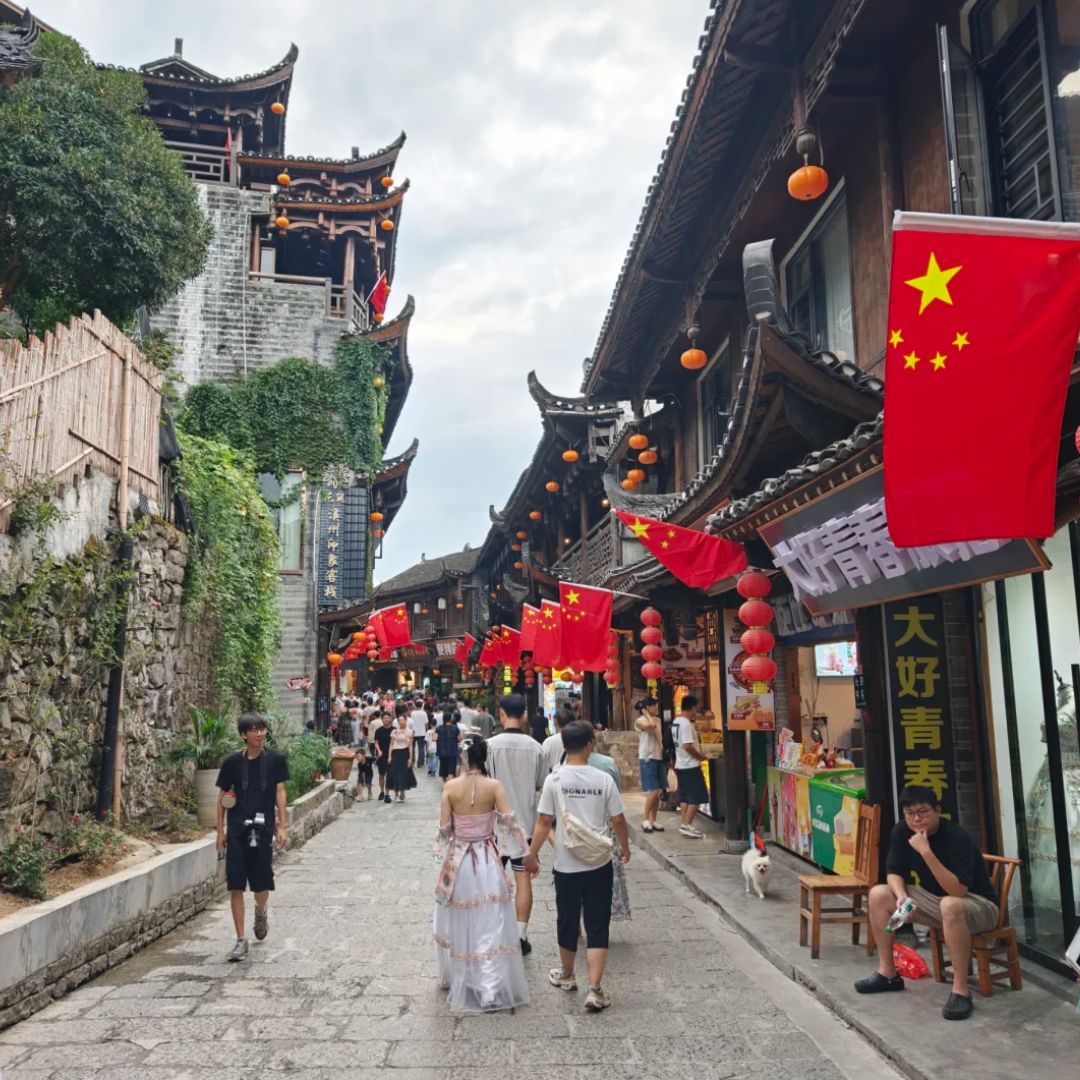
Wuli Stone-Paved Street is perfect for everyday scenes, especially near lanterns and shopfronts. Covered corridors and small corners on the way to the waterfall are often missed but very rewarding. For portraits, look for hanging umbrellas, wooden balconies, and stone walls as natural backdrops.

FAQs
Q: Is Furong Ancient Town the same as Hibiscus Town?
A: Yes! It’s the very same place, renamed after the film Hibiscus Town was shot here, which made the village famous across China.
Q: Can I visit Furong Town as a day trip from Zhangjiajie?
A: You can, but an overnight stay lets you enjoy quieter streets, night views, and the illuminated waterfall without the daytime crowds.
Q: Is Furong Town suitable for families or seniors?
A: Yes, but expect uneven stone paths and some stairs—comfortable shoes and a slow pace help a lot.
Q: Are there English-speaking guides or signs in the town?
A: English is limited, so translation apps or booking a guide ahead of time make the visit much smoother.
Q: Is the famous waterfall natural or man-made?
A: The waterfall is completely natural and beautifully woven into the old town’s layout, making it the highlight of every visit.
Best of Zhangjiajie
Known for its surreal mountain scenery, Zhangjiajie is one of China’s most striking destinations. This guide focuses on the highlights and practical travel tips.
- Zhangjiajie National Forest Park: Avatar Peaks, Monkeys & Epic Views
- Tianmen Mountain: Essential Tips, Routes, and Viewpoints
- Zhangjiajie Grand Canyon: Best Routes, Tips, and Highlights
- Red Stone Forest Park: Top Sights, Routes, and Travel Tips
- Yellow Dragon Cave: Top Highlights, Tips, and Easy Routes to Explore

Our travel blog has already helped thousands of travelers. So join us and come along on our journey around China!
When I’m not on the road or writing, I enjoy street photography, spending time with my wife and our 7-year-old son, Zack, or relaxing at home with our black-and-white cat, Sprite.
Hope my tips inspire your next adventure—happy travels!